Visualizzazione post con etichetta playing the piano. Mostra tutti i post

venerdì 30 ottobre 2015

Do you like playing the piano and singing?

The are no age limits to learn!

The music is good for our body and helps us to express our emotions.

The music hleps us to put in communication with the world.

In this video I explain my method of learning music:


sabato 28 febbraio 2015

Preliminary piano lesson


Here is a video that presents the lesson in a few minutes preliminary to start playing the piano: a beneficial activity for the body and for the whole person.

In the video are explained in a simple way the fundamentals of proper approach to the instrument.

It clarifies that a state of muscle relaxation is functional with the proper performance. The rhythmic pulse is the basis of our coordinated movements and everything corresponds precisely to the physiology of our natural breathing, in the two phases inhaling and exhaling.

From the very nature of our body comes the music!

venerdì 8 marzo 2013

Support the weight of the arm

A young piano student has asked this question: "I would like to have opinions on which fingering to use in the twelfth bar work of Schubert Impromptu Op 90 no. 3 in G Flat Major. Precisely where you "beat" for the first time on those E flat and C flat together. My problem is that I just can not give the correct pressure not to make it look like a hammer."

Here the musical example:
Schubert, Impromptu op.90 no.3


My short answer is this:
"The question is not at all strange, it is very sensible! I'll play with the fifth finger on the E flat and fourth with the C flat supporting the weight of the arm on the fifth finger, "leaning" softly, without a hammer! You will say, easy to say! Depends on technique".

Now I add something. The word "support", not surprisingly, is used in a number of cases in instrumental technique and also in the technique of singing. What does it mean support? It means "to lean, to stand on something, something supportive": so it's the exact opposite of what you do when you make an effort, you lift a weight, it faces a struggle. In everyday life, we lean when we need to stand up to support us (and, metaphorically, we rely on a few people when we feel discouraged or distressed ...).


So, lean means countering effort with an aid which, in the case of the piano, we are given simply by the force of gravity.
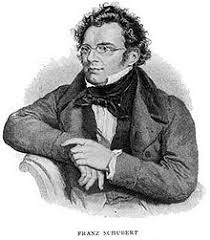
Schubert

But more importantly (and this is the sense of the question) is that properly leaning the weight of the arm can also change the sound between the fingers of the same hand. This is necessary when we, in cases such as that place in this example, the composer needs to play melody and accompaniment in the same hand and therefore, by implication, requires two different sounds in the same hand.


Of course, you do not get an immediate: it is an instrumental technique that acquires the appropriate exercise.

sabato 27 ottobre 2012

Relaxation and movements of the wrist in playing the piano

Nicola Sfredda teacher of piano in Rovereto, 1987
The piano technique, aimed to the well-being of the person who plays, must be set as low as a condition of muscle relaxation. The vertical and lateral movements of the wrist help to achieve this objective of relaxation.

The video, performed ​​personally by the author, illustrates clearly the correct execution of movements and positions.

In Exercise 2, in particular, we note that it is useful to perform a vertical movement of the wrist to support the weight of the arm on the first sound of each formula, the sounds after the wrist gradually gets up and runs even small lateral movements, orienting the hand to the thumb or toward the little finger, so that each finger is perpendicular to its key in the moment in which it must act.

The mode of attack is defined as a "legato sciolto" (tied loose) meaning an attack that binds the sounds one another, but of more concern agility of the fingers of the absolute continuity of the legato.

The complete set of 42 progressive esercises of piano technique describes each of the fundamental techniques to learn to play the piano properly, relaxed, aimed at well-being.

giovedì 13 settembre 2012

Playing the piano and singing into adulthood

Music in all stages of life


In many years of work I have experienced that you can learn to play the piano and sing in all stages of life, without effort, but rather to the great amusement and especially great wellness for your body and the whole person.

So, you can begin in adulthood! Many people are now convinced of what I'm saying, but unfortunately this way of teaching is not yet widespread. 

I happened recently to post on a international social network, widely used in the world, a very simple question: "It 's possible to start learning piano as an adult?".

I received a flood of responses! I sparked a major debate.

And, amazingly, I noticed that most of the answers in the affirmative: yes, you can learn to play the piano and sing into adulthood.

Play the piano and sing: courage, you can!   


Enough so with fear! Enough with the awe of the music! No more frustration!

Free your body, your emotions, your inner experience!