Visualizzazione post con etichetta piano technique. Mostra tutti i post

sabato 28 febbraio 2015

Preliminary piano lesson


Here is a video that presents the lesson in a few minutes preliminary to start playing the piano: a beneficial activity for the body and for the whole person.

In the video are explained in a simple way the fundamentals of proper approach to the instrument.

It clarifies that a state of muscle relaxation is functional with the proper performance. The rhythmic pulse is the basis of our coordinated movements and everything corresponds precisely to the physiology of our natural breathing, in the two phases inhaling and exhaling.

From the very nature of our body comes the music!

venerdì 8 marzo 2013

Support the weight of the arm

A young piano student has asked this question: "I would like to have opinions on which fingering to use in the twelfth bar work of Schubert Impromptu Op 90 no. 3 in G Flat Major. Precisely where you "beat" for the first time on those E flat and C flat together. My problem is that I just can not give the correct pressure not to make it look like a hammer."

Here the musical example:
Schubert, Impromptu op.90 no.3


My short answer is this:
"The question is not at all strange, it is very sensible! I'll play with the fifth finger on the E flat and fourth with the C flat supporting the weight of the arm on the fifth finger, "leaning" softly, without a hammer! You will say, easy to say! Depends on technique".

Now I add something. The word "support", not surprisingly, is used in a number of cases in instrumental technique and also in the technique of singing. What does it mean support? It means "to lean, to stand on something, something supportive": so it's the exact opposite of what you do when you make an effort, you lift a weight, it faces a struggle. In everyday life, we lean when we need to stand up to support us (and, metaphorically, we rely on a few people when we feel discouraged or distressed ...).


So, lean means countering effort with an aid which, in the case of the piano, we are given simply by the force of gravity.
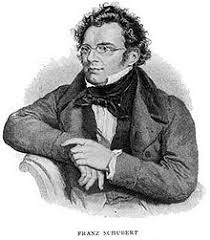
Schubert

But more importantly (and this is the sense of the question) is that properly leaning the weight of the arm can also change the sound between the fingers of the same hand. This is necessary when we, in cases such as that place in this example, the composer needs to play melody and accompaniment in the same hand and therefore, by implication, requires two different sounds in the same hand.


Of course, you do not get an immediate: it is an instrumental technique that acquires the appropriate exercise.

sabato 27 ottobre 2012

Relaxation and movements of the wrist in playing the piano

Nicola Sfredda teacher of piano in Rovereto, 1987
The piano technique, aimed to the well-being of the person who plays, must be set as low as a condition of muscle relaxation. The vertical and lateral movements of the wrist help to achieve this objective of relaxation.

The video, performed ​​personally by the author, illustrates clearly the correct execution of movements and positions.

In Exercise 2, in particular, we note that it is useful to perform a vertical movement of the wrist to support the weight of the arm on the first sound of each formula, the sounds after the wrist gradually gets up and runs even small lateral movements, orienting the hand to the thumb or toward the little finger, so that each finger is perpendicular to its key in the moment in which it must act.

The mode of attack is defined as a "legato sciolto" (tied loose) meaning an attack that binds the sounds one another, but of more concern agility of the fingers of the absolute continuity of the legato.

The complete set of 42 progressive esercises of piano technique describes each of the fundamental techniques to learn to play the piano properly, relaxed, aimed at well-being.

mercoledì 3 ottobre 2012

The study of double notes on the piano

The technique of double notes is the most complex mechanisms executing piano. It is playing successions of two simultaneous sounds with the same hand, often at high speed. For example (Chopin, Study for the thirds, op. 25 n. 6):
Chopin, Etudes pour piano

Or (Chopin, Study for the sixths, op. 25 n. 8):
Chopin, Etudes pour piano

The technique of double notes requires a synthesis of all the movements of the mechanism piano: the support of the weight of the arm, the articulation of the fingers, the lateral movement of the hand in relation to the perpendicular of the finger in use. You should also check the relaxation of the arm, forearm and hand, even by small movements of the wrist, elbow and shoulder. At this level of study you must have already acquired sensory awareness of the movements, positions and strategies to prevent stiffening.

To achieve this complexity of goals, in my collection 42 progressive exercises for piano Technique (The technique for the welfare of the pianist) I develop the material in ten exercises, which are precisely designed to progressively lead to the solution of the difficulty.

First we deal with the movement of articulation of the fingers, which represents an improvement to a technique already acquired in the first section of the method.

Then we proceed to the study of double notes, especially the sequences of the thirds and sixths, but also of the fourths and fifths (although less common in the classical repertoire).

A particular attention is then given to the finger passing over on other fingers, similar to what has been studied with the thumb to the study of the scales, but here extended to other fingers, for example: the fourth, third, second finger pass over the fifth, or the fifth passes under the fourth, third, second.

It then proceeds with the study of scales in double notes, and finally an exercise summary, which summarizes not only the technique of double notes, but in the end all the main movements of the piano mechanism:

Exercises for Piano


lunedì 3 settembre 2012

How to study the Impromptu op. 90 n. 3 for piano by Schubert

We study the Impromptu Op. 90 n. 3 for piano by Schubert

Here is a more detailed explanation of how briefly mentioned in a previous post, we want to study the Impromptu op. 90 3 of Franz Schubert (1827) and in particular the bar 10, which is a situation of this type (remember that we have six flats in the key, time 4/2, Andante):

The problem of piano technique place from this example (and that, similarly, of measure 12 addressed in the previous post) is the presence, in the right hand only, of two different musical situations, which require two different approaches from the point of view of technique that must achieve: we have in fact a singing line in the upper part and a part of accompaniment at the bottom; the same hand must perform two different things simultaneously and must therefore have the ability to create two different types of sounds; all this must be done obviously without stiffening.

A complex piano technique

It is in this case about a complex technique and use this adjective warning that it does not necessarily coincide with the adjective difficult: rather it is a multiplicity and copresence of situations. Obviously it still requires a certain level of skill past. Not surprisingly, in my collection 42 Exercises of piano technique, this technique takes the card (and the corresponding video) number 26, being in the seventh section, dedicated to polyphony.

Exercises for the study

My first advice is to study in separate parts, just as you do when you study hands separately: in which case we study separately the two parts simultaneously present in the same hand. We begin with the singing, of course keeping the fingering provided:
 Esempio musicale: studio della parte superiore della mano destra

On the 'D flat' we must support the weight of the arm, according to the known position (fifth finger pitched above the key, lowering the wrist); on the first 'C flat' we must take care of a little support but considering the diminuendo indicated, will be therefore useful to raise the wrist slightly; the maneuver is made more difficult by the need to use the same finger but try to bind (it will be quite an illusion of legato, then necessarily helped by the use of the pedal); the second 'C flat' we give back a little support, lowering the wrist, however, maintaining the intention of diminuendo (note, however, the most important rhythm of this second 'C flat', so that will naturally have a small support of expression: tries to sing three notes and what you will be clear).

Now we study the arpeggios of the bottom, of course respecting the fingering provided here:
 Esempio musicale: studio della parte interna nella mano destra

In this case we must treat the uniformity of sound, more piano of the singing, homogeneous, legato, curing also in this case the diminuendo. We will have to perform these sounds tying, with minimum articulation of the fingers (fingers near to the keys) and with the small lateral movements of the hand which provide softness and relaxation.

After that, we will try to combine the two techniques in simultaneous execution.

We could also think of a further preliminary exercise, carried out in this way:
 Esempio musicale: esercizio per l'appoggio del peso del braccio nella polifonia

You need to support the weight of the arm to the tune of the song and run a light staccato on internal chords. It may be argued that it is in this case of a different technique from the previous (execute chords is different from run arpeggios), however, I believe is a good exercise propaedeutic, because it develops equally effectively the sensation of this weight difference between different parts of the same hand.

Other examples in the Impromptu of Schubert

The first measure of the piece is simple and, in his writing, truly an example of this type of technique; less difficult than the previous example, because the sounds of singing are always at break of internal figuration:
Esempio musicale: la battuta 1 dell'Improvviso op. 90 n. 3 di Schubert

And even more exemplary this step, to measure 3:
Esempio musicale: movimenti da battuta 3 dell'Improvviso op. 90 n. 3 di Schubert

Song without words

The result is certainly effective, believe me: experimented on myself and many students. We are ready to abandon to the sublime art of this great composer, this Lied ohne Worte (Song, Romance ie, without words) that expresses high his poetry.